


Who Are We?
11th June 2023
Who are we? What is our purpose? For some reason, us humans have asked and continue to ask these questions, and from time to time, someone comes up with a new answer. Now that we have distanced ourselves from anthropocentrism in our minds, we can observe with more humility, without demanding too much from ourselves and the world around us, because after all, we are “just” animals.
Far from home
Let’s suppose we capture a male lion and a lioness and confine them in a zoo. Scared and confused, they still manage to reproduce, giving birth to a new generation of lions.
The young lion cubs will grow up in the zoo without ever seeing the outside world, without ever seeing the herds of large mammals in the vast savannah, without ever hunting, without ever being able to escape, without ever doing “lion things.” The parents die, and with them, the memory of life beyond the cage. The new lions find themselves in a place that does not suit their claws, their fangs, and their instinct.
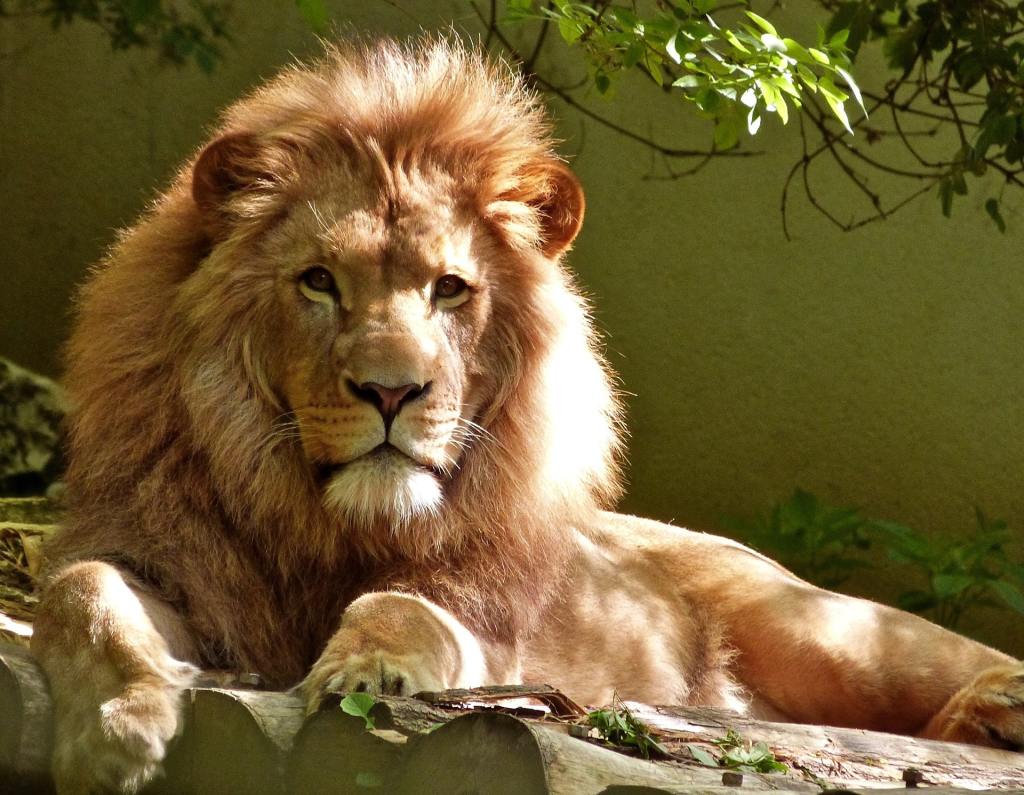
Only at that moment, one of these lions might start to wonder, “Who am I?” Before, there was no need to ask, simply because it knew. It was what it was, a lion. But by disconnecting from its nature, it no longer recognizes itself and cannot explain its role. The exact same thing could have happened to us.
Wild humans and humans in captivity
“Look at the traces you have left to discover who you are”
Animals in captivity exhibit abnormal behaviors and high levels of stress. If it is true that “captivity” means the segregation of wild animals from their natural environment imposed by humans for study, entertainment, etc., then we can distinguish humans who live in their natural environment and depend on it from those who live away from their natural environment by self-imposition.
That being said, we can therefore assert that wild humans are very rare and endangered animals, living in small family groups scattered in tropical areas around the world.
The vast majority of humans, however, live in captivity, within gigantic clusters of nests that resemble the cubic crystals of certain minerals (such as pyrite, selenite).
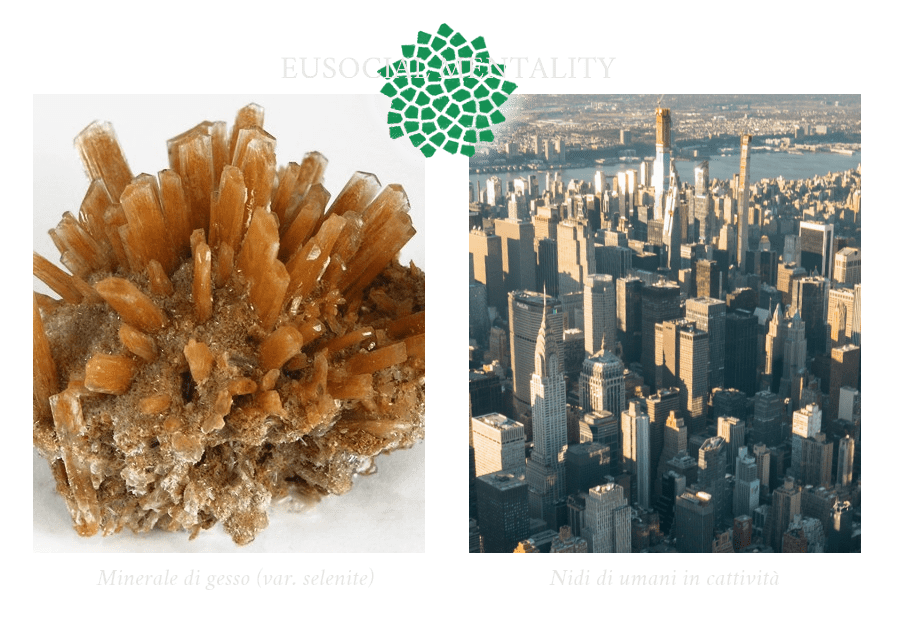
The ‘wild humans’ live their lives in peace and good health, without doubts about their purpose. In an interview, a young Jarawa woman (people who have remained isolated from the rest of humanity for at least 70,000 years, long before the first civilizations arose) states that she has always been happy and does not remember any sad moments in her life.
Well, so what then?
Who are we? We are humans in captivity, social primates who find themselves in a somewhat uncomfortable situation, far from their own ecosystem. And what are we doing here? Nature comes to our aid by urging us to do what makes us feel good. What makes us feel bad harms us, and what makes us feel good keeps us healthy. The purpose of all of us is simply to feel good. And no, “feeling good” doesn’t mean feeling good at the expense of others; if one is feeling bad, their pain will inevitably affect others (we are very social animals!).

 Eusocial Mentality
Una replica a “Who are we?”
[…] one can identify recurring patterns. By observing our own evolutionary history, we can understand who we are and the direction we have […]
"Mi piace""Mi piace"